Exhibition: Monet in Le Havre
LE HAVRE

Description
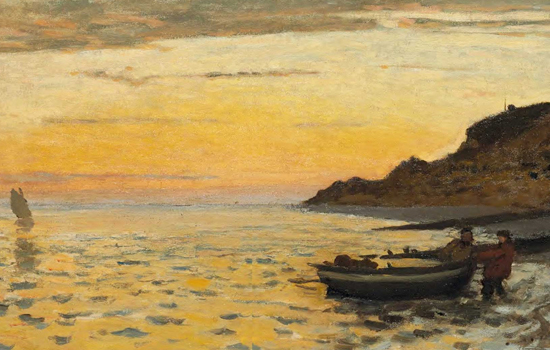
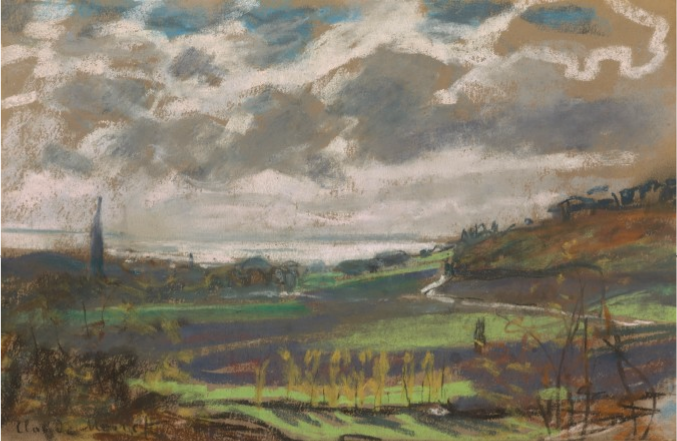
To mark the 100th anniversary of the artist’s death in 1926, the MuMa – Musée d’art moderne André Malraux is preparing an exhibition entitled “Monet au Havre.” The exhibition explores Claude Monet’s formative years in the city, from 1845 — when his family settled there — to 1874, the year of the first Impressionism exhibition in Paris and of the artist’s last major series of seascapes painted in the port.
During these three decades, the young artist, born in 1840, took his first artistic steps. He filled sketchbooks with drawings made from life, caricatured Le Havre’s notable figures, experimented with landscape painting alongside Eugène Boudin, absorbed lessons from the great masters, and produced his first still lifes. At the same time, he divided his life between the city of his childhood and Paris, where he encountered the painters who would soon form the Impressionist circle.
In Le Havre, Monet also encountered photographers searching for picturesque subjects or scenes capable of challenging a rapidly evolving technique. Their photographs provided a rich reservoir of motifs that would later appear in the painter’s work. From the rugged landscapes of the Pointe de la Hève at Sainte-Adresse — long considered a “world’s end” beloved by the people of Le Havre — to the lively sailing regattas in the harbor and the heart of the great industrial port, the works created in this Norman city tell the story of an emerging artistic vocation.
It was here that several masterpieces were painted, including “La Terrasse à Sainte-Adresse” and “Régates à Sainte-Adresse” (1867, New York, Metropolitan Museum of Art), as well as “Le Port du Havre, effet de nuit” (1872, Potsdam, Museum Barberini).
Le Havre was also where Monet found early support for his artistic ambitions— within his own family, particularly through his brother Léon Monet, and among local collectors such as the Gaudibert family, who purchased some of his first paintings. Later on, founding members of the Cercle de l’Art moderne — Olivier Senn, Pieter Van der Velde, and Charles-Auguste Marande — became regular buyers of his work. The young artist also attracted new patrons through the connections of his friends, the painters Eugène Boudin and Gustave Courbet.
Drawing on previously unpublished documents, the exhibition presents the artist’s family environment, life in Le Havre and its impact on Monet, the influences shaping his early painting, the conditions of his first artistic training, his numerous caricatures of Le Havre’s notable figures, the sites he painted in the city, the evolution of his technique, and his earliest patrons. A timeline, maps of the region, and excerpts from correspondence will provide essential— often previously unseen — documentation for understanding the painter and his development.
Organized both thematically and chronologically, the exhibition will feature around 80 works, including paintings, drawings and sketchbooks by Monet, along with archival documents and numerous photographs.
Exhibition: June 5 – September 27, 2026, during museum opening hours.